Unlocking Convenience: The Rise of Shared Banking and ATM Pooling

Geldmaat is a prime instance of Shared Banking put into action.

In an era where collaboration and resource optimisation are paramount, the financial industry has witnessed a remarkable shift towards shared banking, ATM pooling, and cooperative banking initiatives. This innovative approach not only enhances efficiency but also reduces costs for banks, fostering a mutually beneficial ecosystem for both financial institutions and consumers.

In October 2023, experts across Europe and Emerging Markets met at the annual summit held by the ATM Industry Association (ATMIA). During the conference, they explored the factors that have contributed to the rise of shared banking and delved into some notable success stories from across Europe.


Why Banks Are Moving Towards Shared Banking Model

The primary reason to move towards a shared banking model is to reduce operational costs and meet the involved needs of the consumers. Banking hubs are following shared branches, or locations where many different banks provide in-person and digital service to the public. Although this concept may sound odd to some because competitors are joining together at a location to provide banking services to their clients. It allows banks to share costs, create greater access for customers, and most importantly, create an environment for competing banks to follow a cooperative banking feature and work together. 

Some of the benefits of moving towards shared banking can be: 

Reducing Cost Pressure and Operational Efficiency 

When banks operate in a standalone ATM network, it becomes quite expensive for them. They have to manage: 

  • Cash replenishment and logistics
  • Hardware maintenance and upgrades
  • Security and insurance costs
  • Regulatory compliance
  • Settlement and reconciliation overhead

With the help of the ATM pooling banking model, banks allow fixed and variable costs to be shared across multiple institutions by reducing per-bank expenditure. By having consolidated infrastructure, banks can strategically deploy shared machines in optimal locations. Thus, it frees up capital for digital innovation and customer-facing services. Shared banking shifts ATMs from a cost centre to a shared utility. 

Declining Branch Networks 

Having access to a combined ATM network sharing bank branches has long been a critical component of banking and financial services. However, as banks continue to evolve to meet the changing needs of their customers, many are now focusing on reducing their costs. To do this, many banks are eliminating physical locations in order to cut their operational costs, and it reduces the number of places where cash can be accessed. Shared banking provides a middle ground:

  • Fewer duplicated branches
  • Centralised ATM hubs
  • Wider geographic coverage with fewer machines

Through multi-bank collaboration, banks can rationalise physical networks without fully withdrawing from local communities.

Regulatory and Financial Inclusion 

In many regions, regulators expect banks to support universal access to cash, even as digital adoption increases. Shared banking helps institutions meet these obligations collectively rather than individually. This is particularly important where:

  • Governments mandate minimum cash access standards.
  • Central banks emphasise resilience in payment systems.
  • Financial inclusion is a policy priority.

Shared banking models reduce compliance burden while maintaining regulatory alignment. This approach balances financial stability and consumer protection, which prevents overly strict compliance costs. 

Resilience and Business Continuity 

By focusing on shared banking through resilience and business continuity, it creates robust plans and capabilities to resist disruptions and resume critical operations. Through this, banks can ensure customer trust, financial stability, and regulatory compliance. The shared ATM networks are inherently more resilient. In times of:

  • Natural disasters
  • Geopolitical events
  • System outages
  • Economic shocks

Cash demand often spikes unexpectedly. Shared banking networks distribute risk and capacity, ensuring availability even when individual institutions face disruption. This resilience was clearly demonstrated in multiple European markets during recent crisis events.

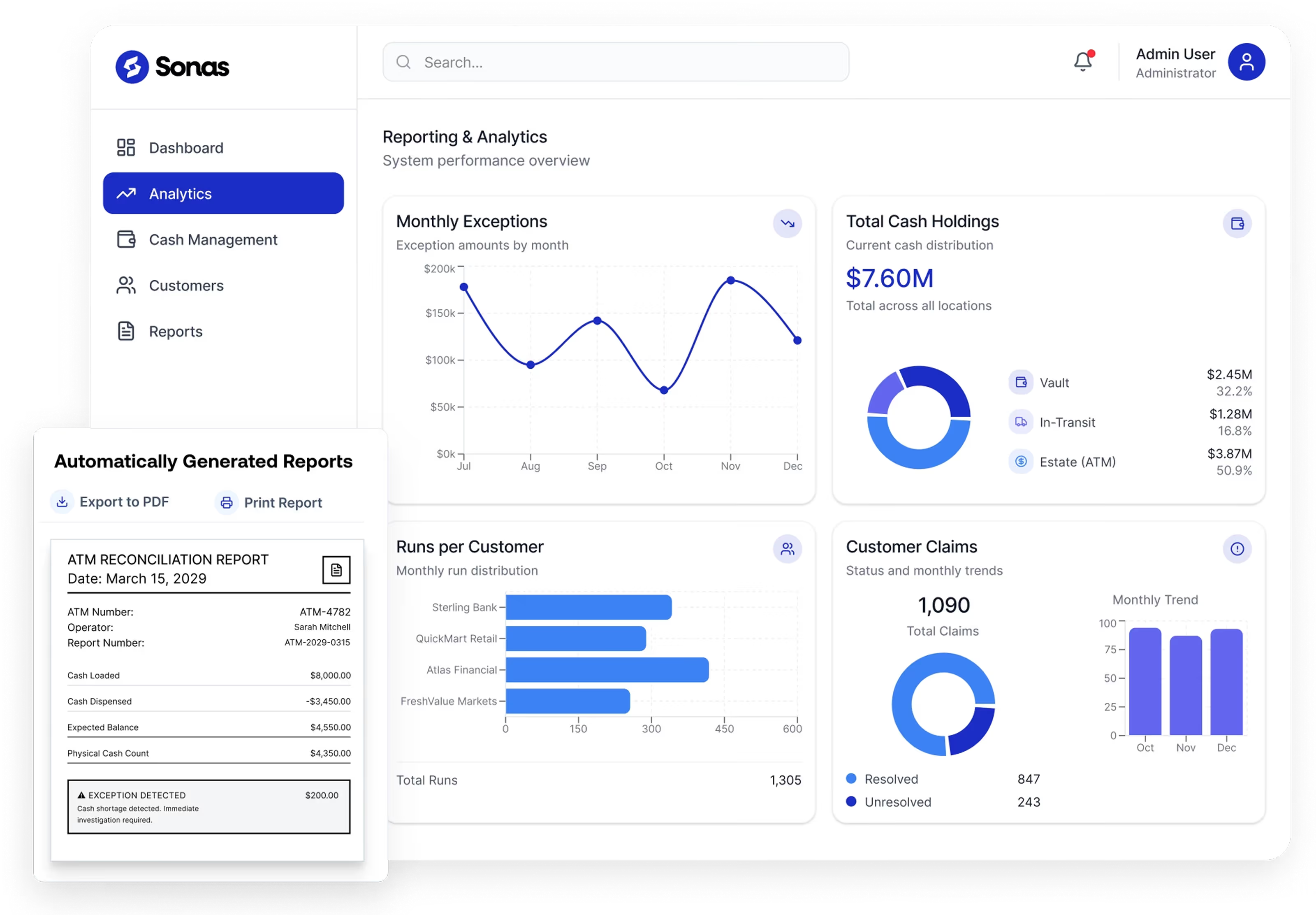
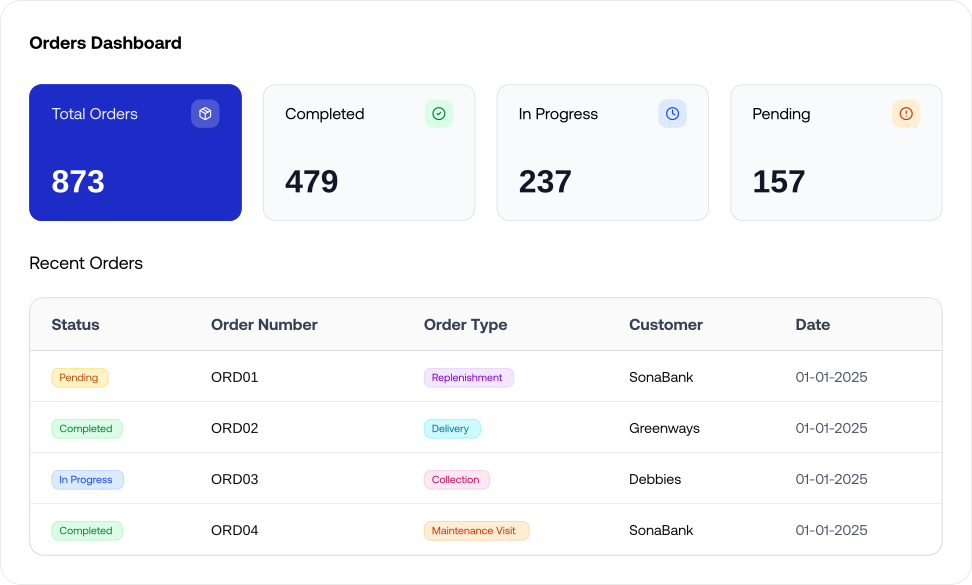
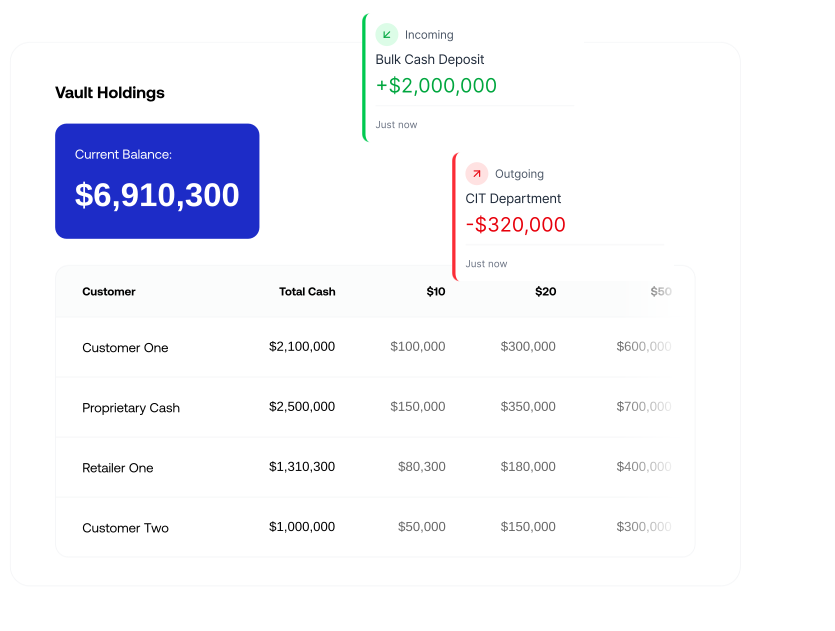
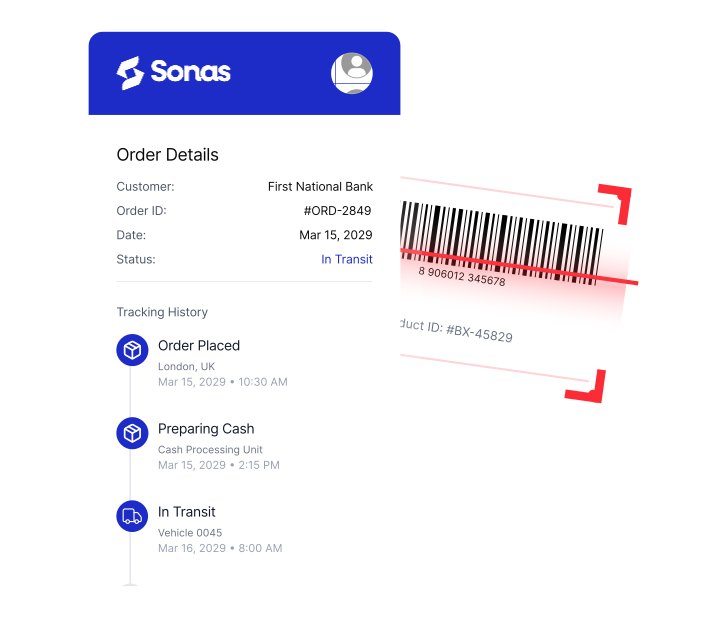
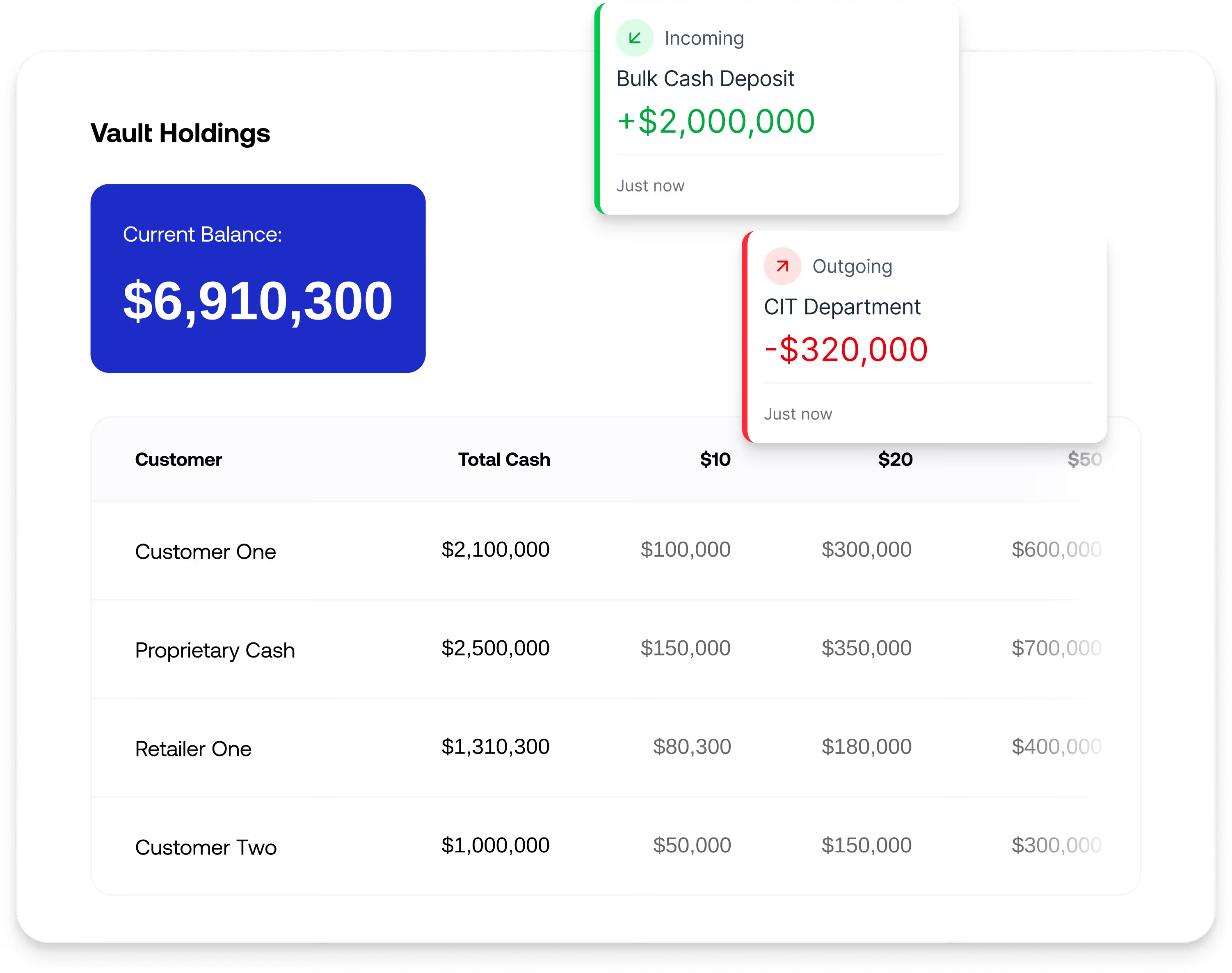
Better manage cash processing and settlements today with SONAS. 

Why has there been a shift to shared banking?

The move towards shared banking is driven by several factors, with improved efficiency and cost savings at the forefront. In an increasingly interconnected world, financial institutions are recognising the advantages of collaboration to streamline processes and optimise resource utilisation. ATM pooling banking not only reduces operational expenses but also enhances customer accessibility to essential services.

The surge in digital payments globally has markedly impacted the role of cash. Cash usage has declined in many areas but remains crucial in specific communities. In developed markets, we’ve observed a noticeable reduction in bank branches and ATMs, resulting in limited access to cash for some individuals. Shared banking aims to maintain cash access while easing financial burdens on banks.

Shared Banking Works!

Geldmaat: A Dutch Pioneer in Shared Banking

Geldmaat, a joint initiative by three major Dutch banks – ABN AMRO, Rabobank, and ING, exemplifies the power of ATM pooling. By consolidating their ATMs under the Geldmaat brand, these banks have not only reduced the number of ATMs but also enhanced the overall efficiency of their cash distribution network. This collaborative effort ensures wider geographical coverage and accessibility for customers, all while optimising operational costs.

Bankomat: Transforming ATM Services Through Collaboration

In Sweden, Bankomat has become a household name in shared banking. Established by major Swedish banks, including Nordea, Swedbank, and SEB, Bankomat has successfully pooled resources to create a unified network of ATMs. It simplifies cash withdrawals for customers and enables banks to share ATM maintenance costs, creating a sustainable solution.

A representative from Bankomat highlighted the significant financial inclusion gap in Sweden, revealing that approximately 10% of the population is not financially included. Additionally, he underscored the crucial role of cash in times of crisis by noting a striking 30% increase in the amount withdrawn from ATMs in the days following the Ukrainian invasion. This underscores the enduring importance of cash during challenges, as individuals rely on physical currency for financial needs.

Post Office: A Glimpse into Coordinated Banking Hubs

The United Kingdom has embraced co-op banking through innovative solutions like the Post Office Banking Hubs. These hubs, strategically located in post offices across the country, serve as co-op banking facilities. In collaboration with various banks, the UK Post Office provides a range of banking services, from cash deposits to account inquiries. This shared approach ensures that even in remote areas, customers have access to essential financial services.

Batopin: Elevating Co-op Banking in Belgium

Batopin, a shared banking initiative in Belgium, brings together banks to create a network of shared ATMs. By consolidating their resources, member banks enhance the efficiency of cash distribution, reduce costs, and provide customers with convenient access to their funds. The cooperative model benefits banks and fosters a sustainable, customer-centric banking experience.

atm pooling banking

Challenges of Shared Banking

While the advantages of shared banking are undeniable, challenges do exist, primarily during the planning and implementation phases. The successful cases demonstrate that shared banking models can indeed work effectively; however, the key lies in the meticulous setup and execution of these collaborative initiatives. Some of the challenges of the shared banking are: 

Settlement

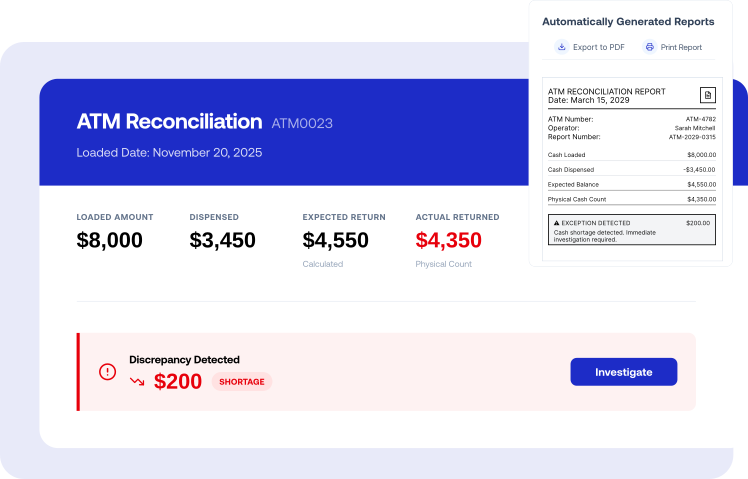
One such challenge is settlement and reconciliation. With multiple institutions sharing infrastructure, transaction reconciliation becomes more complex. Accurate settlement across banks requires robust systems to ensure transparency, trust, and auditability. Without automation, addressing challenges in the current scenario is crucial for maintaining shared banking integrity and sustaining trust from both banks and consumers. Having a reliable platform like Sonas can play a pivotal role in ensuring settlements are recorded and mismatches can escalate and be processed accurately.

BETTER MANAGE CASH PROCESSING AND SETTLEMENTS TODAY 

Logistics, Cooperation, and Compliance

Forging shared banking networks among multiple financial institutions involves navigating a complex landscape. Initially, these institutions must reach a consensus on terms, as well as the sharing of resources, benefits, and risks. Additionally, banking partnerships must surmount the challenge of integrating diverse infrastructure, further adding to the intricacy of the collaborative endeavour.

Compliance with various banking regulations and standards becomes complex when multiple institutions are involved. Establishing a regulatory framework that addresses the shared banking model and navigating compliance issues across different jurisdictions can be challenging. 

Maintenance and Upkeep

The banking partnership or ATM pooling bank collaborative efforts require ongoing maintenance and upkeep of shared resources. Coordinating maintenance schedules, addressing technical issues promptly, and ensuring a consistent level of service across the shared infrastructure pose ongoing challenges. Maintaining consistent service quality across a shared ATM network is one of the most operationally demanding aspects of shared banking. Customers expect reliable uptime and uniform service, regardless of which bank originally deployed the ATM.

Technology’s Role in Enabling Shared Banking

Technology plays an essential role in advancing shared banking. The collaborative financial system and modern ATM operations support shared models: 

  • Centralising transaction data across institutions
  • Automating settlement and reconciliation
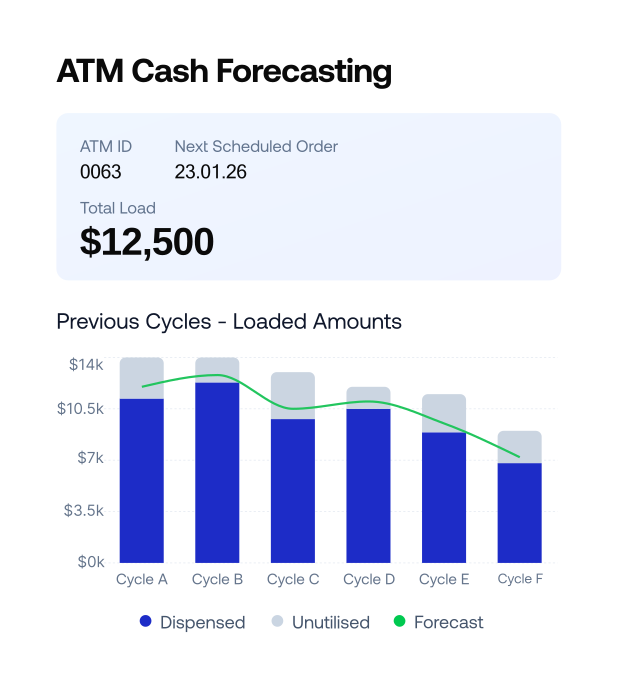
  • Providing real-time visibility into cash positions and ATM health
  • Enabling transparent audit trails for all stakeholders

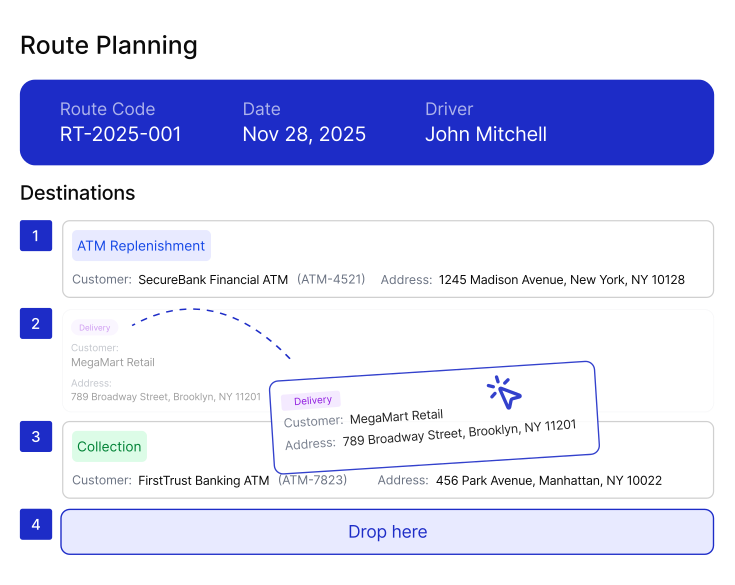
SONAS enables shared banking ecosystems by delivering:

  • Automated transaction reconciliation
  • Accurate settlement processing
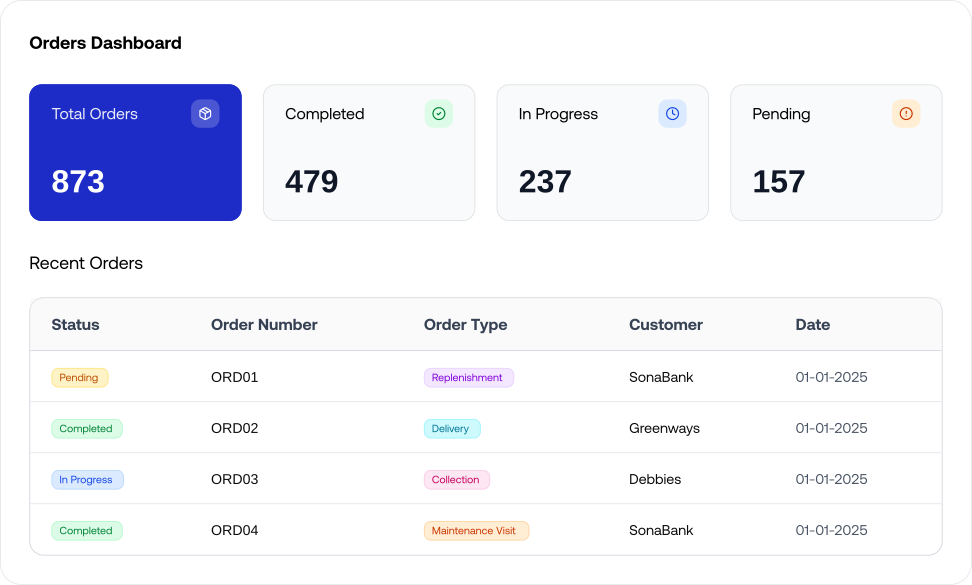
  • Unified reporting across pooled networks
  • Scalable support for multi-bank collaboration

Technology transforms shared banking from a coordination challenge into a controlled, efficient operating model.

The Future of Shared Banking: A Collaborative Evolution

As shared banking, ATM pooling, and co-op banking continue to gain momentum, the future looks promising for the financial industry. Collaborative efforts not only drive efficiency but also align with the evolving expectations of customers for seamless and accessible services. Successes from Geldmaat, Bankomat, UK Post Office Hubs, and Batopin show shared banking is a strategic shift to a customer-centric landscape.

In conclusion, the future of shared banking holds the potential for even greater collaboration, innovation, and customer satisfaction. As institutions explore cooperation, consumers anticipate an efficient, cost-effective banking experience grounded in collaboration and shared success. The shared banking revolution is underway, transforming the financial industry into a more connected, resilient, and customer-centric ecosystem.

Talk to SONAS about enabling shared banking success.

FAQ

1. What is shared banking?

In shared banking, multiple banks work collaboratively to share resources in relation to related infrastructures, typically ATM networks. This results in reduced duplication of assets across individual financial institutions (FIs). By sharing an ATM network, banks have greater access to more locations for servicing their customers with cash withdrawals. When banks share the initial infrastructure build-out and operation of the ATM network, each FI shares in the operating costs associated with these resources, resulting in improved operational efficiencies through pooling of resources and reduced capital expenditures due to less-intensive individual ATM networks for servicing customers. 

Shared banking often enables greater opportunities for banks to provide services to customers in remote or rural locations where independent banking operations are not financially reasonable to sustain. Ultimately, through shared banking, banks can provide better service at reduced expenses, thus making it easier for them to meet customer demands while providing greater value for both FIs and their customers.

2. What is ATM pooling in shared banking?

ATM pooling is a core component of shared banking, where multiple banks collectively use a single, unified ATM network instead of operating individual, branded machines. In this model, ATMs are either co-branded or white-labeled, allowing customers of participating banks to withdraw cash from the same machines. 

ATM pooling reduces duplication of infrastructure, lowers cash handling and maintenance costs, and improves ATM coverage across regions. It also simplifies customer access by ensuring consistent availability of cash services. For banks, ATM pooling enhances operational efficiency while maintaining service reach, making it a practical response to declining ATM usage in some areas and increased cost pressure.

3. Why are banks adopting shared banking models?

Several banks are adopting shared banking models to address increasing operational costs, changing consumer behavior, and increased pressure to maintain financial inclusion. Stand-alone ATM networks can be expensive to operate because of the cost of cash logistics, security, compliance, and maintenance, while branch closures and decreased ATM density could create barriers to access to cash for some of the most vulnerable populations.

Focusing on shared banking allows banks to distribute costs, improve network efficiency, and sustain cash access without expanding infrastructure. At the end, shared banking helps institutions remain competitive, cost-efficient, and customer-focused in a rapidly evolving financial landscape. 

4. What challenges do shared banking models face?

Shared banking has many advantages, but it poses several issues in the areas of operations and governance. It must be coordinated among many institutions; therefore, they all must agree on the terms of business, how to share the risk, and the terms of service. As transactions occur between several banks, settlement and reconciliation processes become more complex because they must be tracked and reported accurately. 

Another challenge related to compliance is the fact that many shared networks may operate in multiple jurisdictions and comply with numerous regulations. Strong control and oversight are required to ensure that ATM uptime, customer service, and all maintenance standards are consistently maintained by all members. If an organisation has no effective control or governance structure, the initiative is likely to be at risk of suffering from poor data quality, inefficiencies in operations, and gaps in accountability.

5. How does technology support shared banking?

Technology is the backbone of successful shared banking models. Modern ATM management software enables centralised monitoring, real-time cash visibility, automated reconciliation, and accurate settlement across multiple banks. These systems provide a single source of truth for transaction data, cash movements, and exceptions, ensuring transparency and audit readiness. 

Advanced platforms also support predictive maintenance, helping reduce downtime and improve service consistency. By integrating data from ATMs, cash-in-transit providers, and core banking systems, technology simplifies coordination, strengthens governance, and allows shared banking networks to scale efficiently while maintaining accuracy, compliance, and customer trust.

Sonas
Privacy Overview

This website uses cookies so that we can provide you with the best user experience possible. Cookie information is stored in your browser and performs functions such as recognising you when you return to our website and helping our team to understand which sections of the website you find most interesting and useful.